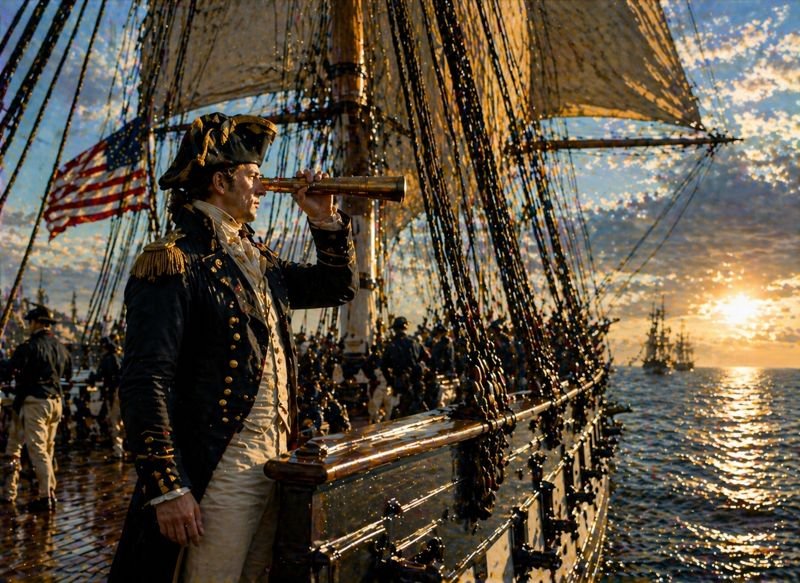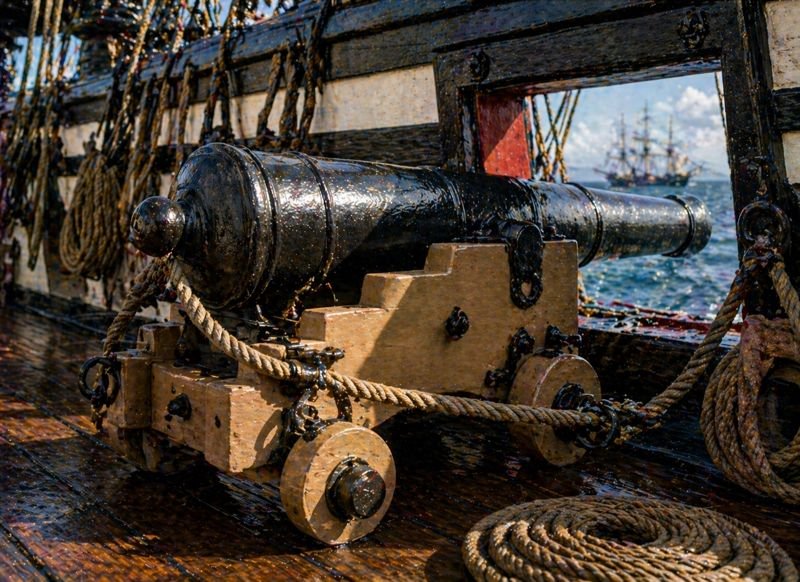
The USS Constitution’s defeat of HMS Guerriere on August 19th, 1812, was one of the most celebrated naval victories of the early War of 1812. Coming just weeks after the war began, the engagement provided a significant morale boost to the United States and demonstrated that the young nation’s navy could successfully challenge the powerful Royal Navy in single-ship combat.
The encounter took place in the North Atlantic, southeast of Nova Scotia. The USS Constitution, under the command of Isaac Hull, was on patrol when it sighted HMS Guerriere, a British frigate commanded by Captain James Richard Dacres. The Guerriere had been actively seeking out American vessels, reportedly displaying a captured American mast as a challenge. The stage was set for a confrontation between two well-armed ships, though not equally matched in terms of design and condition.
As the ships approached one another, both captains maneuvered for advantage. The wind conditions allowed for traditional sailing tactics, and the two vessels engaged in a series of positioning moves before closing to firing range. Early exchanges of cannon fire were largely ineffective at long distance, as both sides sought to conserve ammunition and inflict maximum damage at closer range.
When the USS Constitution finally moved within effective range, the battle intensified rapidly. Hull ordered his gunners to hold their fire until they were close enough to ensure accuracy and impact. When the American broadside was unleashed, it proved devastating. The heavier 24-pounder guns of the Constitution inflicted significant damage on the Guerriere, whose lighter 18-pounders were less effective in return.
One of the most famous moments of the battle came when British cannonballs were seen bouncing off the thick wooden hull of the USS Constitution. This led to the nickname “Old Ironsides,” symbolizing the ship’s remarkable durability. The use of dense live oak in its construction gave the ship a resilience that surprised the British and contributed directly to its success in the engagement.
As the battle progressed, the USS Constitution maneuvered skillfully to rake the Guerriere, a tactic involving firing along the length of the enemy ship, causing maximum damage to its structure and crew. The American ship’s superior handling and crew coordination allowed it to maintain an advantageous position, whilst the British vessel struggled to respond effectively.
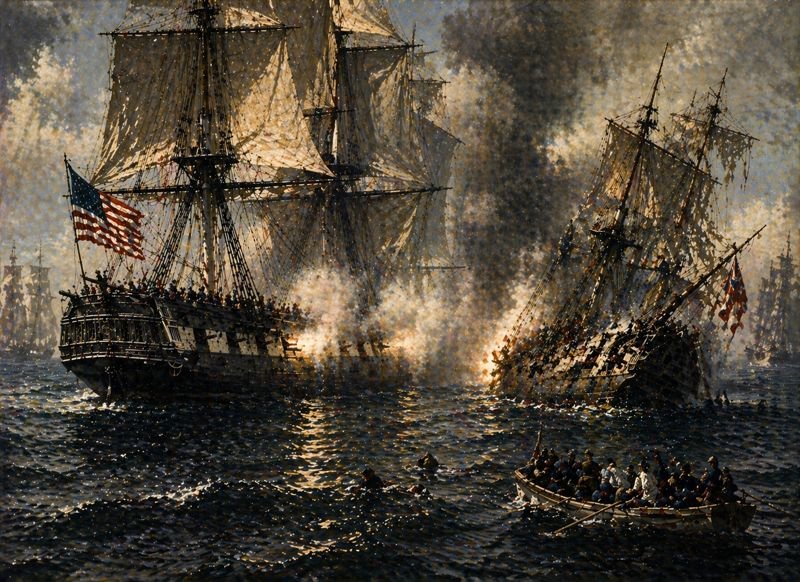
A turning point came when the Guerriere’s mizzenmast was shot away, severely limiting its ability to maneuver. Soon after, the mainmast and foremast were also brought down, leaving the ship dismasted and largely helpless. Without the ability to steer or effectively position its guns, the Guerriere was reduced to a floating wreck.
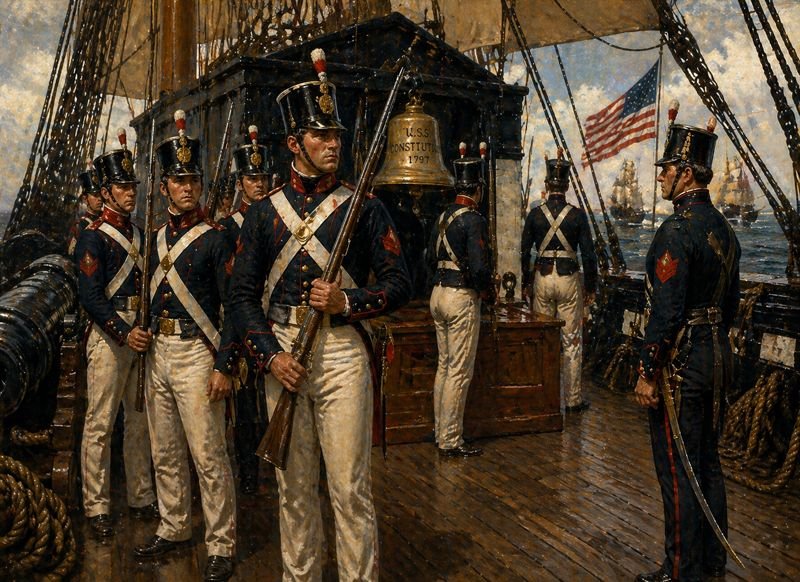
During the battle, there were attempts at marines boarding, as the ships came into close contact. However, these efforts were brief and did not determine the outcome. Instead, the decisive factor remained the sustained and accurate cannon fire from USS Constitution, combined with its structural strength and tactical positioning.
Captain Dacres, recognizing that further resistance was futile, ordered the British colors struck, signaling surrender. The victory was clear and decisive. The Guerriere was so badly damaged that it could not be saved, and after transferring prisoners and supplies, the USS Constitution set the ship on fire, leading to its eventual destruction.
The significance of this victory extended far beyond the immediate battle. At a time when the Royal Navy was considered the most powerful naval force in the world, the defeat of one of its frigates by an American ship challenged assumptions about naval superiority. It demonstrated that the design of the new American frigates, combined with skilled captains and well-trained crews, could overcome even experienced opponents.
For the United States, the victory provided a much-needed boost in confidence during the early stages of the war. It reinforced the value of the navy and justified the investment made in ships like USS Constitution. The success also elevated Captain Hull and his crew to national prominence, turning them into symbols of American resilience and success.
From a tactical perspective, the battle highlighted several key factors: the importance of heavy armament, the advantages of strong construction, and the value of disciplined gunnery. The USS Constitution’s ability to absorb damage while delivering powerful broadsides gave it a clear edge, while its crew’s training ensured that this advantage was fully realized.
In the broader context of the War of 1812, the defeat of HMS Guerriere was part of a series of American naval victories that helped offset setbacks on land. These engagements showed that whilst the United States could not match Britain’s overall naval might, it could achieve success through superior design, strategy, and execution in individual battles.
The battle between USS Constitution and HMS Guerriere remains one of the defining moments in early American naval history. It combined innovation, skill, and determination to produce a victory that resonated far beyond the Atlantic, shaping perceptions of the United States as a capable and confident maritime nation.