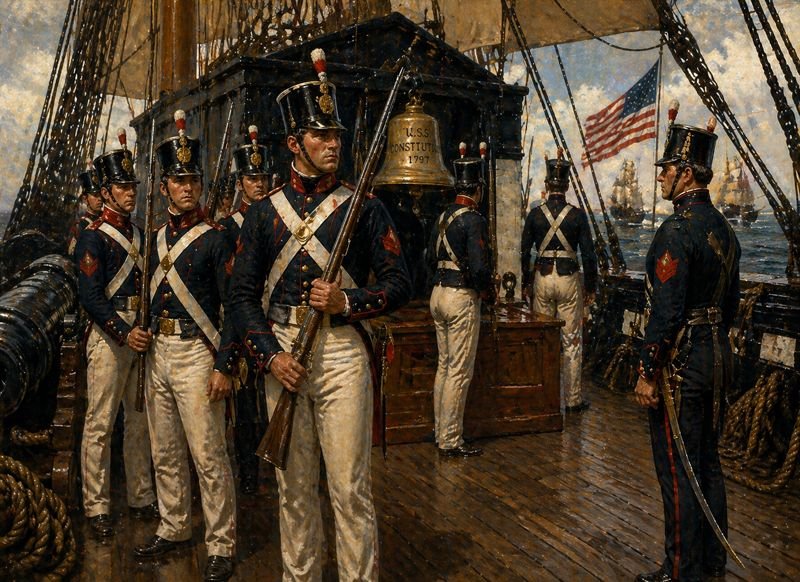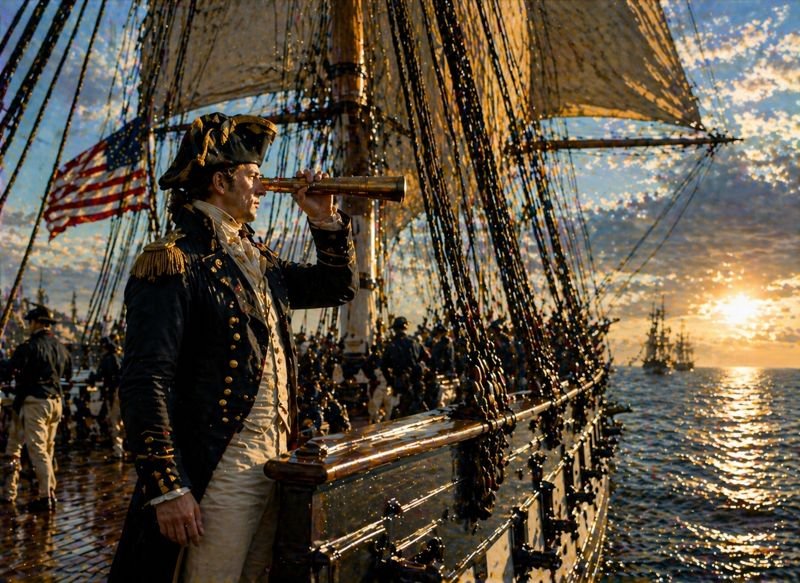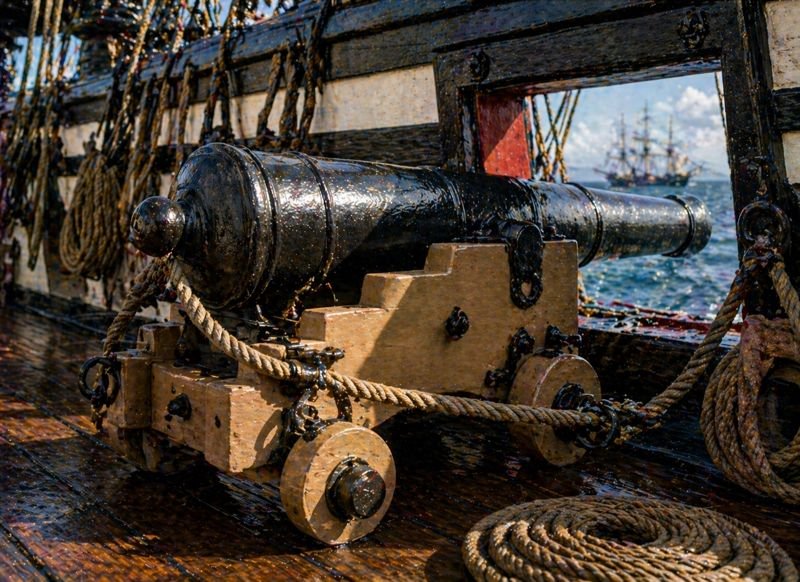
The USS Constitution’s capture of HMS Cyane and HMS Levant on February 20th, 1815, stands as one of the most remarkable actions of the War of 1812. Coming late in the war, after a peace treaty had been signed but before news had reached all forces at sea, the engagement demonstrated the continued effectiveness of the Constitution, the skill of its crew, and the advantages of American frigate design in combat.
By early 1815, The USS Constitution was under the command of Charles Stewart. Stewart was an experienced and capable officer who had already proven himself in earlier engagements. Operating in the Atlantic, far from American shores, he sought opportunities to engage British shipping and warships, continuing the aggressive strategy that had defined the ship’s wartime service.
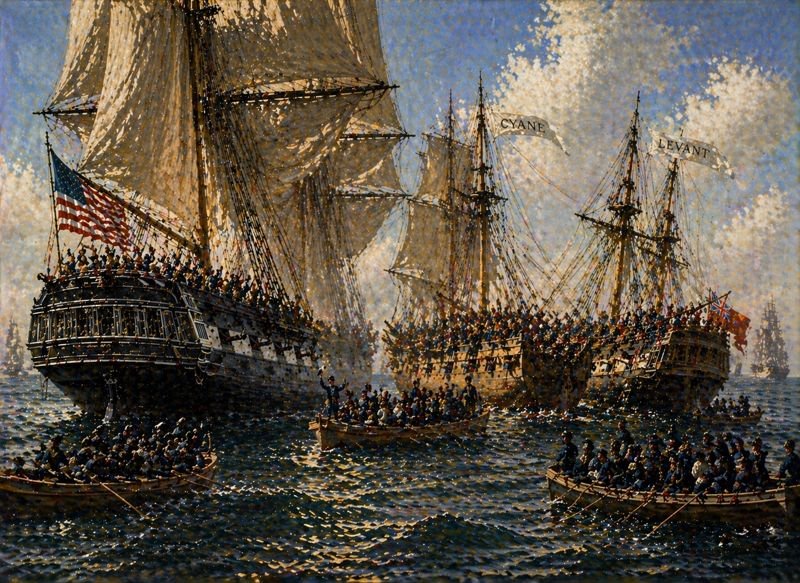
On February 20th, The Constitution encountered two British warships sailing together: HMS Cyane, a 34-gun frigate, and HMS Levant, a smaller 21-gun ship. Although individually weaker than the American frigate, their combined firepower posed a potential threat. Engaging two opponents at once required careful tactics, precise maneuvering, and disciplined gunnery.
Stewart approached the situation with a clear plan. Rather than allowing the British ships to coordinate their attacks effectively, he maneuvered USS Constitution to control the engagement and prevent the two vessels from concentrating their fire. This involved positioning the American ship so that it could engage one opponent while limiting exposure to the other, a challenging task that required both skillful sailing and careful timing.
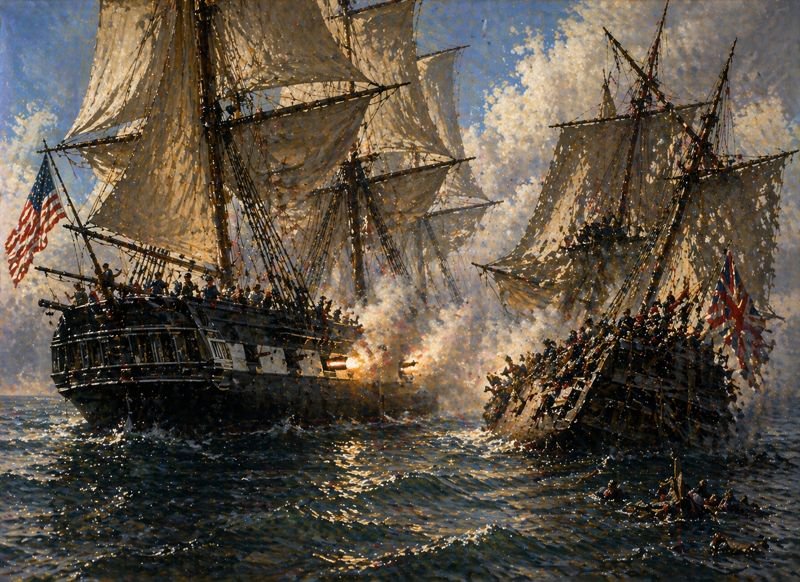
As the battle began, the USS Constitution opened fire with its powerful broadside, targeting HMS Cyane. The heavier guns of the American frigate quickly made an impact, damaging the British ship’s rigging and hull. At the same time, Stewart kept a watchful eye on HMS Levant, adjusting his position to avoid being caught between the two ships.
One of the key factors in the engagement was the ability of USS Constitution to outmaneuver its opponents. Its design, with a longer hull and efficient sail plan, allowed it to maintain an advantageous position throughout the battle. Stewart used this to isolate the British ships, preventing them from effectively supporting one another. The fight continued into the evening, with both sides exchanging fire under increasingly difficult conditions. Darkness added complexity to the engagement, making coordination and communication more challenging. Despite this, the crew of the USS Constitution maintained extreme discipline, executing orders and continuing to deliver accurate and sustained fire.
HMS Cyane was the first to suffer serious damage. Its rigging was heavily compromised, and its ability to maneuver was significantly reduced. Under the pressure of Constitution’s broadsides, Cyane was forced to strike its colors, signaling surrender. This left HMS Levant to continue the fight alone.
Stewart then shifted his focus to HMS Levant. With one opponent already captured, he was able to concentrate the full force of the USS Constitution against the remaining ship. Levant attempted to evade and reposition, but the American frigate’s superior speed and firepower gradually wore it down. Eventually, Levant also struck its colors, completing a rare and impressive double capture.
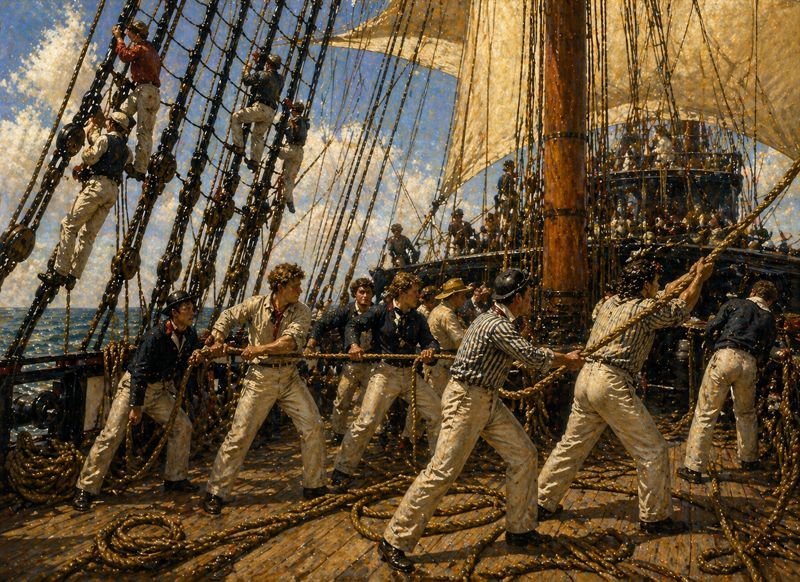
The success of this engagement can be attributed to several factors. First was the design of USS Constitution, which combined heavy armament with strong construction and good sailing qualities. These factors allowed it to withstand enemy fire while delivering powerful blows in return. Second was the leadership of Charles Stewart, whose tactical decisions ensured that the British ships could not exploit their numerical advantage. Finally, the discipline and training of the crew played a crucial role, enabling them to operate effectively even under the challenging conditions of a night battle.
The capture of HMS Cyane and HMS Levant was significant not only for its tactical achievement but also for its timing. Although the Treaty of Ghent had been signed in December 1814, ending the war, news of the peace had not yet reached all naval forces. As a result, this battle became one of the final engagements of the War of 1812. When Stewart later learned of the treaty, he took steps to return his prizes, though HMS Levant was eventually recaptured by a British squadron before it could reach American waters.
In a broader sense, the victory reinforced the reputation of USS Constitution as one of the most successful warships of the era. It demonstrated the effectiveness of American naval strategy, which emphasized quality over quantity, and highlighted the effectiveness of U.S. ships to operate independently and achieve decisive results. The capture of HMS Cyane and HMS Levant stands as a testament to the enduring strengths of USS Constitution. It showcased the ship’s ability to defeat multiple opponents through a combination of design, leadership, and crew performance. As one of the last major actions of the war, it also served as a fitting conclusion to the ship’s distinguished wartime service, cementing its place in naval history.