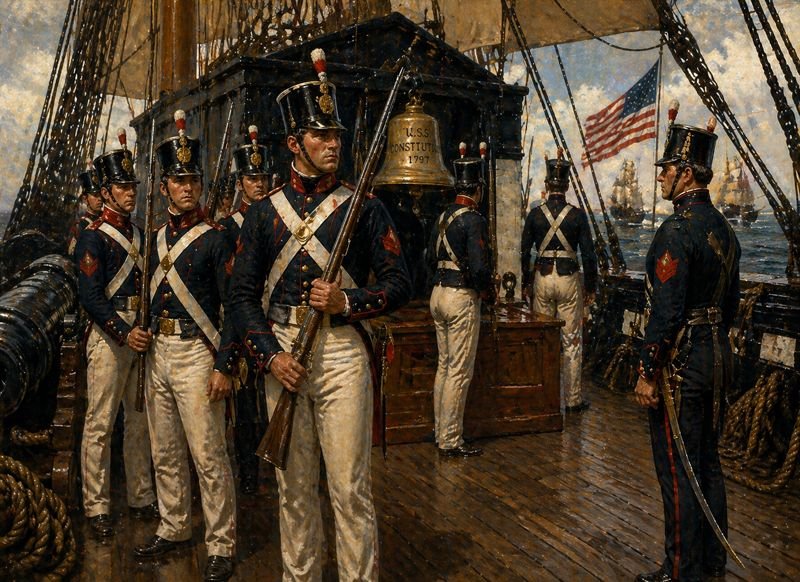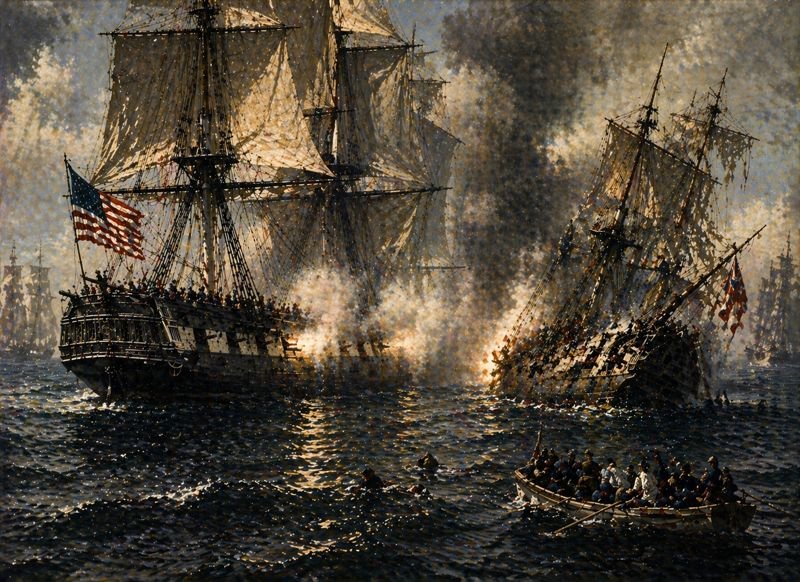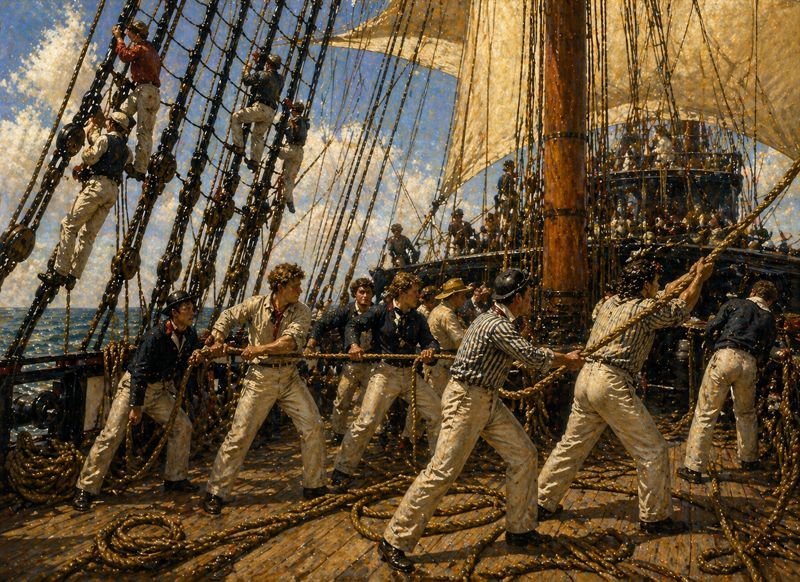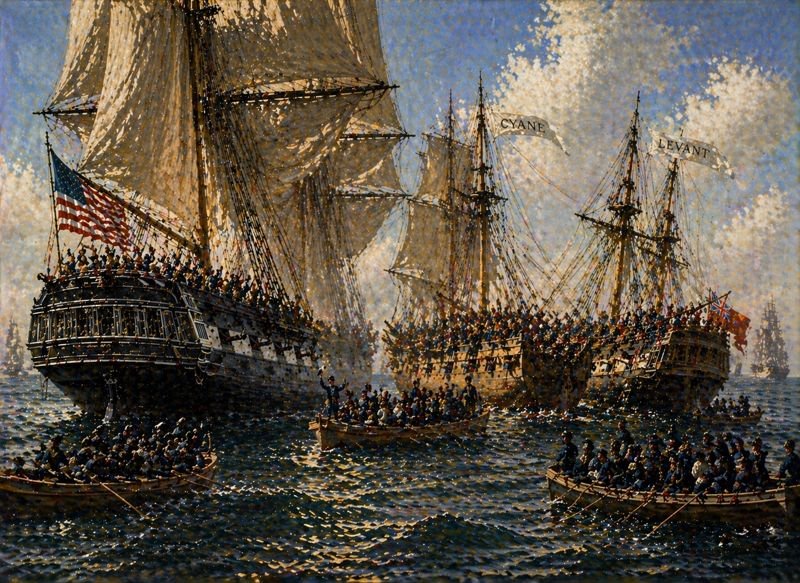
The USS Constitution played a significant, though sometimes understated, role in the First Barbary War, a conflict that marked the young United States first sustained overseas military campaign. The war arose from long-standing tensions with the Barbary States of North Africa, particularly Tripoli, which demanded tribute from nations in exchange for safe passage of their merchant ships. When the United States refused to continue increasing these payments, the Pasha of Tripoli declared war in 1801, prompting the deployment of American naval forces to the Mediterranean.
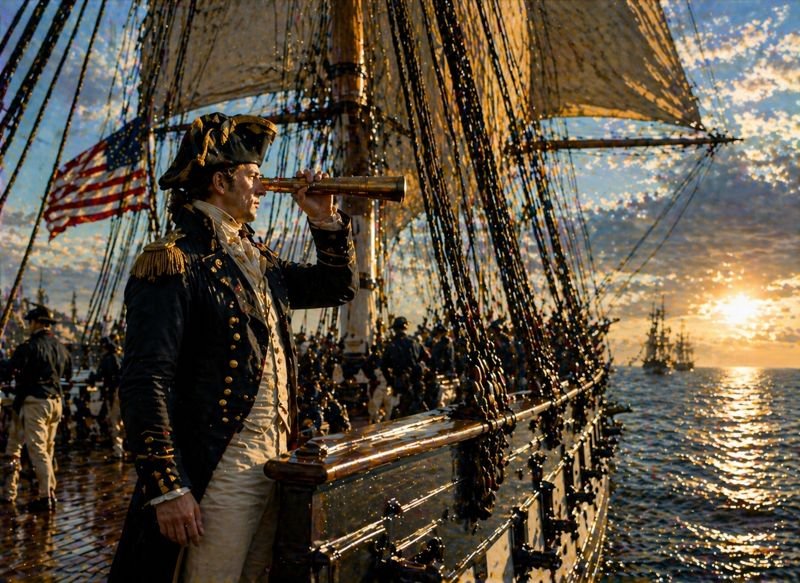
The USS Constitution, one of the new heavy frigates authorized by the Naval Act of 1794, was among the ships sent to assert American interests abroad. Its presence in the Mediterranean was part of a broader effort to protect American assets, challenge piracy, and demonstrate that the United States was willing and able to defend its sovereignty without relying on European powers.
Under the command of Captain Edward Preble, the USS Constitution became the flagship of the Mediterranean Squadron during a critical phase of the war. Preble was an assertive and disciplined officer who believed in applying sustained pressure against Tripoli. From his base aboard the Constitution, he coordinated operations against Tripolitan forces, including blockades, bombardments, and support for smaller vessels engaged in coastal attacks.
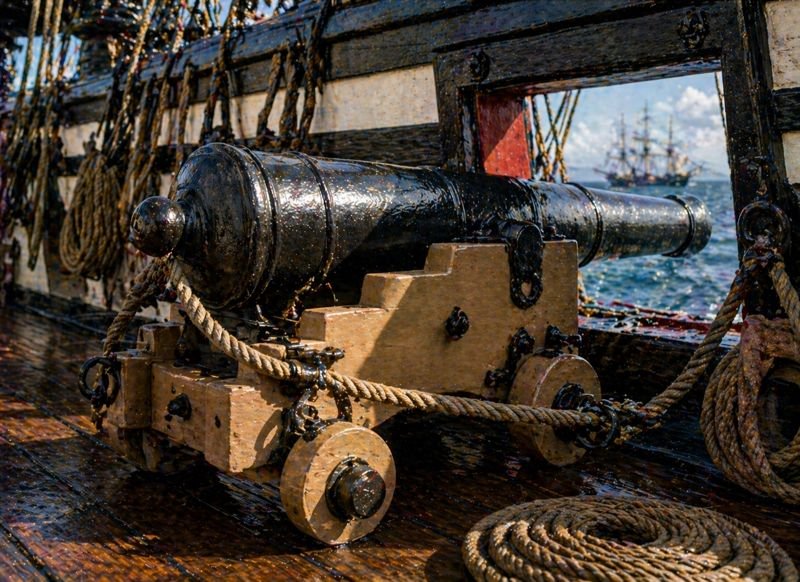
The ship’s size, armament, and durability made it well suited to this role. As a heavy frigate, USS Constitution carried powerful guns and could operate independently over long distances, making it ideal for extended deployment far from American shores. Its ability to project power in the Mediterranean was a key factor in maintaining pressure on Tripoli and protecting American shipping. One of the primary roles employed during the war was blockade. The USS Constitution and other vessels worked to restrict Tripoli’s access to supplies and limit its military operations. Whilst blockades were difficult to enforce completely, they placed economic and military pressure on the Tripolitan government, contributing to the overall American effort.
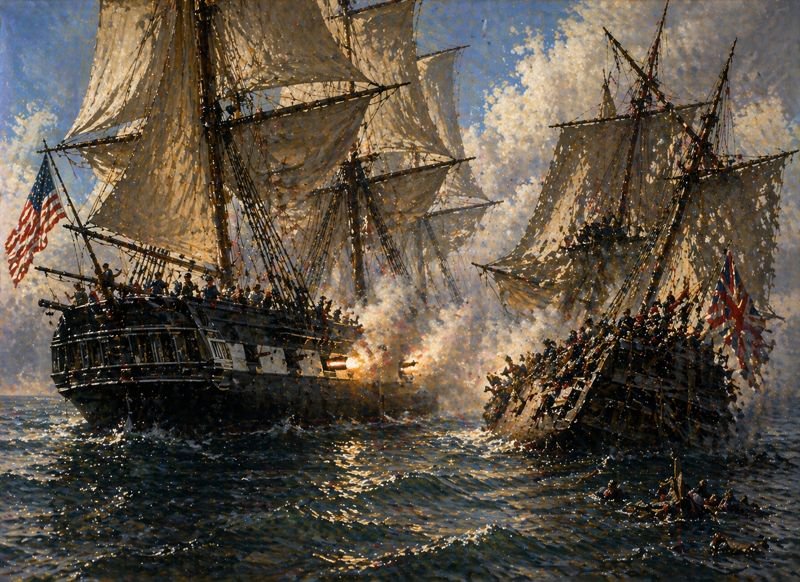
The USS Constitution also played a role in supporting direct attacks on Tripoli’s defenses. Although the frigate itself did not always engage in close-range bombardments, due in part to the risks posed by coastal fortifications and shallow waters, it served as a command platform and provided logistical support for smaller ships and gunboats that carried out these attacks. These coordinated attacks were designed to weaken Tripoli’s defenses and demonstrate American resolve.
The leadership of Edward Preble aboard USS Constitution was particularly important in shaping the course of the war. Preble emphasized control, discipline, and aggressive action, setting a standard for the officers and crews under his command. Many of the young officers who served with him would go on to play important roles in later conflicts, including the War of 1812. In this sense, the Constitution was not only a warship but also a training ground for a generation of naval leaders.
The ship’s presence also had a symbolic impact. By operating in the Mediterranean, far from home waters, USS Constitution demonstrated that the United States was capable of projecting power on an international stage. This was an important statement for a nation that was still establishing its identity and credibility. The decision to confront the Barbary States rather than continue paying tribute signaled a shift toward a more assertive foreign policy.
Despite its strengths, USS Constitution faced challenges during the Barbary War. Operating in unfamiliar waters, dealing with supply issues, and coordinating with other ships required careful planning and adaptability. The conditions of the Mediterranean, including weather and geography, added to the complexity of naval operations. Nevertheless, the ship and its crew were able to perform effectively within these constraints.
The conflict ultimately concluded in 1805 with a treaty that ended hostilities between the United States and Tripoli. Whilst the agreement involved some concessions, it marked a pivotal moment in American history, demonstrating that the United States could defend its interests through military action rather than tribute. USS Constitution’s role in this outcome was part of a broader naval effort that helped secure American shipping.
In retrospect, the involvement of USS Constitution in the Barbary Wars highlights the importance of naval power in the early years of the United States. The ship’s design, capabilities, and leadership allowed it to serve effectively in a distant and challenging theater. Its actions contributed to the development of American naval strategy and helped establish a tradition of overseas deployment that continues to this day. Ultimately, USS Constitution’s role in the Barbary Wars was not defined by a single dramatic battle but by its sustained presence. It demonstrated the value of a capable navy in protecting national interests and set the stage for the ship’s later achievements in the War of 1812.