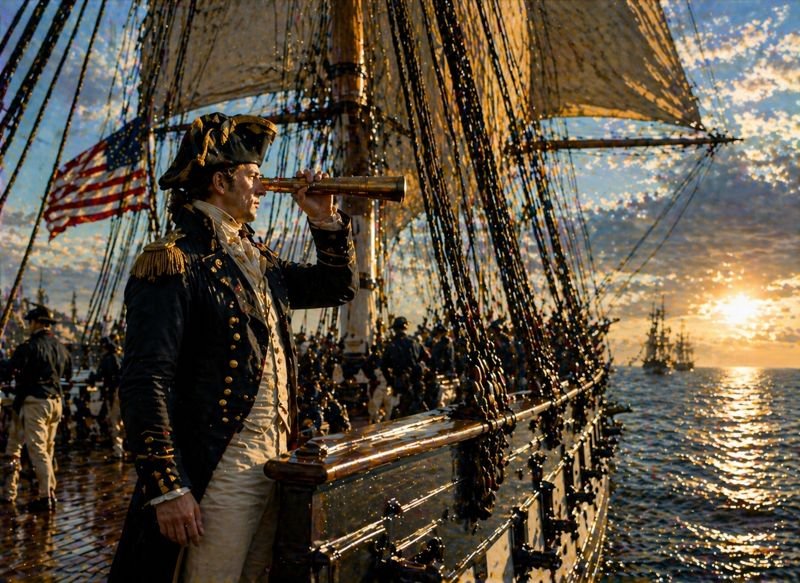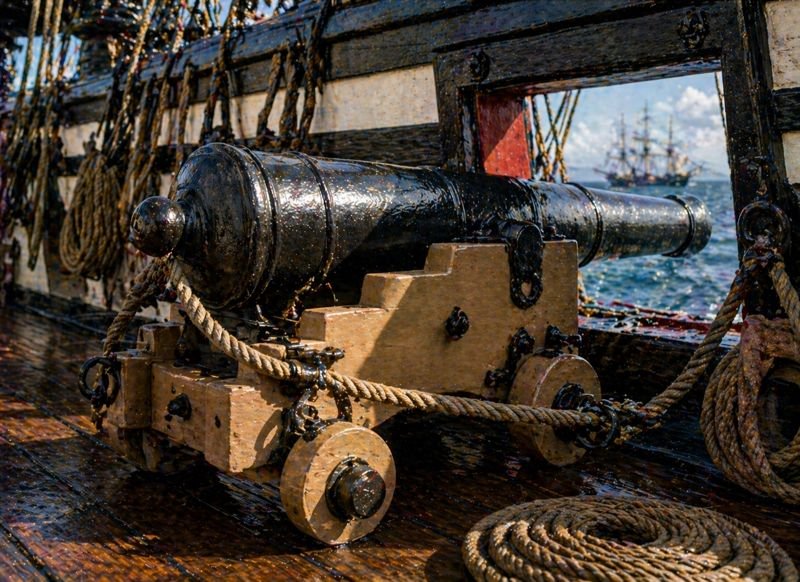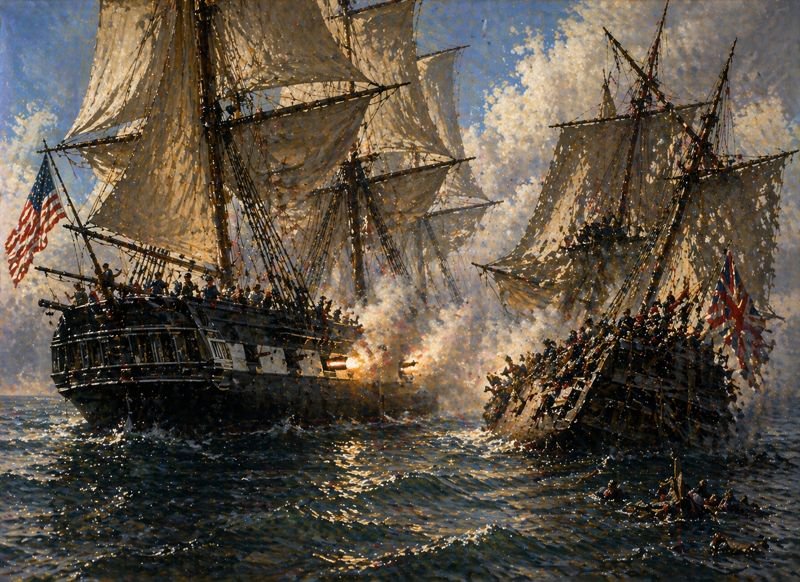
The USS Constitution’s escape from a British squadron in July 1812 is one of the most remarkable seamanship feats in naval history. Taking place just weeks after the outbreak of the War of 1812, the incident demonstrated not only the ship’s design advantages but also the skill, discipline, and ingenuity of her crew under the command of Isaac Hull.
On July 17th, 1812, the USS Constitution was sailing off the coast of New Jersey when it encountered a British squadron consisting of several warships, including the frigates HMS Guerriere, HMS Shannon, HMS Aeolus, and HMS Belvidera, along with a ship of the line, HMS Africa. These ships were part of a powerful Royal Navy presence tasked with blockading American ports and capturing U.S. vessels. The British squadron had a clear advantage in numbers and firepower, and if they had been able to bring USS the Constitution to battle under favorable conditions, the American frigate would likely have been overwhelmed.
At the time of contact, the weather was calm, with very little wind, conditions that limited the effectiveness of sails and made maneuvering difficult. This lack of wind affected both sides, but it also created an opportunity for innovative tactics. Recognizing the danger, Captain Hull immediately ordered every possible measure to increase the ship’s speed and distance from the pursuing British vessels.
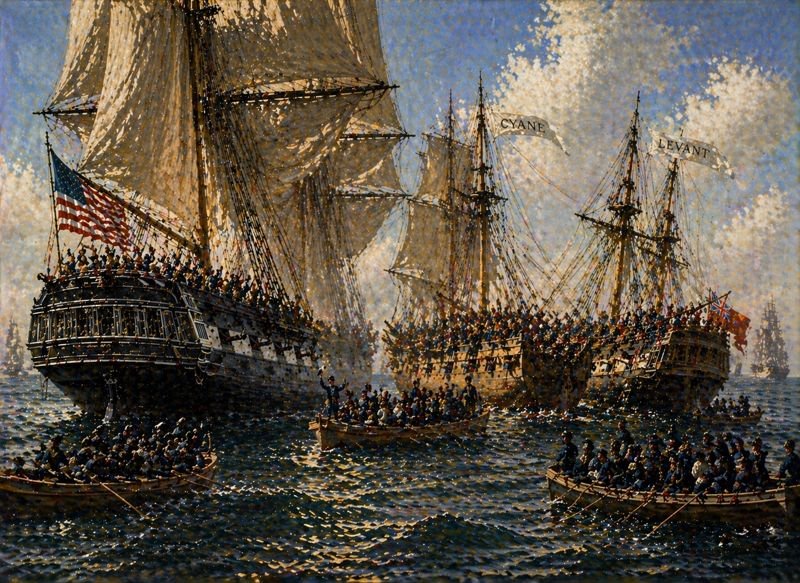
One of the most important tactics employed was “kedging.” This involved sending small boats ahead of the ship carrying anchors. The anchors would be dropped at a distance, and the crew aboard USS Constitution would then haul the ship forward by pulling on the anchor cables using capstans. Once the ship reached the anchor, the process would be repeated. This method allowed the ship to move even in near-calm conditions, effectively creating its own forward motion independent of the wind.
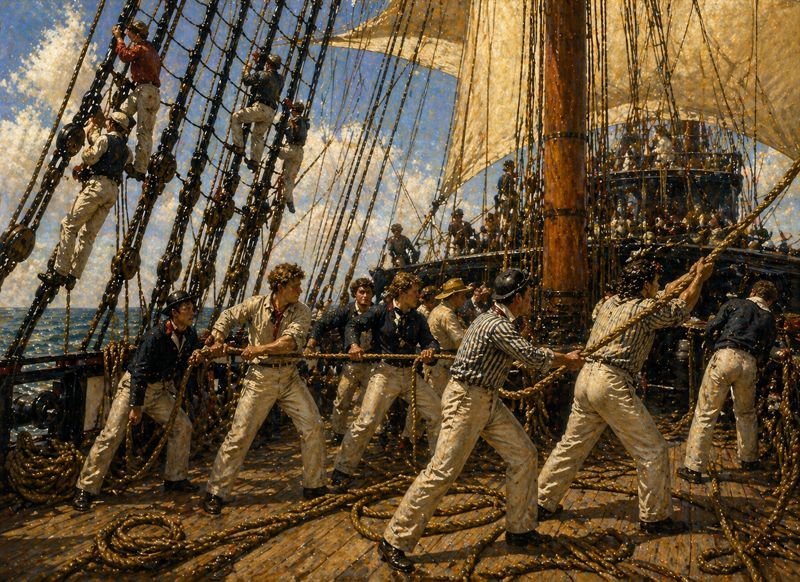
Kedging was labor-intensive and required precise coordination. Sailors worked continuously, often under extreme physical strain, to haul the heavy cables and reposition the anchors. The success of this tactic depended on the crew’s endurance and discipline, as well as the leadership of the officers directing the effort. The British ships attempted similar methods, but USS Constitution’s crew executed the process with exceptional efficiency and were far more effective at it.
In addition to kedging, Hull ordered the use of towing boats. Small boats were deployed to pull the ship forward, supplementing the movement gained from the anchors. This combination of techniques allowed USS Constitution to maintain a slow but steady path, gradually increasing the distance from the British squadron.
Hull also took advantage of every available breeze. When slight winds did appear, the crew adjusted the sails carefully to capture as much movement as possible. The ship’s design, with its long hull and efficient rigging, helped it respond well even to minimal wind. This gave the USS Constitution an edge over some of the pursuing vessels, which were not as well suited to such conditions. Another tactic involved reducing drag. Hull ordered that unnecessary weight be minimized and that the hull be kept as clean as possible. At one point, the crew even poured water over the ship’s sides to reduce friction between the hull and the sea, a small but potentially useful measure in such a close contest.
The pursuit continued for more than two days, with both sides engaged in a slow, relentless effort. The British ships attempted to close the gap using their own boats and kedging techniques, and at times they came within range. However, the USS Constitution’s consistent application of these tactics, combined with the crew’s determination, prevented the British from gaining a decisive advantage.
Eventually, a favorable wind began to develop, and USS Constitution was able to make better use of its sails. Its superior speed under sail became more apparent, allowing it to pull away more effectively from the pursuing squadron. One by one, the British ships fell behind, unable to maintain the chase.
By the end of the ordeal, USS Constitution had successfully escaped, preserving both the ship and its crew. This escape was significant not only as a demonstration of seamanship but also as a morale boost for the United States at the beginning of the war. It showed that American naval forces could outmaneuver even the powerful and more experienced Royal Navy under difficult conditions.
The tactics used during the escape, particularly kedging and the coordinated use of small tow boats, highlight the importance of adaptability in naval warfare. Rather than relying solely on traditional sailing methods, Captain Hull and his crew employed a combination of techniques to overcome environmental challenges and numerical disadvantage. The escape of USS Constitution in July 1812 stands as a testament to the skill and resourcefulness of its crew. It demonstrated that success at sea depended not only on the size and strength of a ship but also on the ability of those aboard to think creatively and work together under pressure.