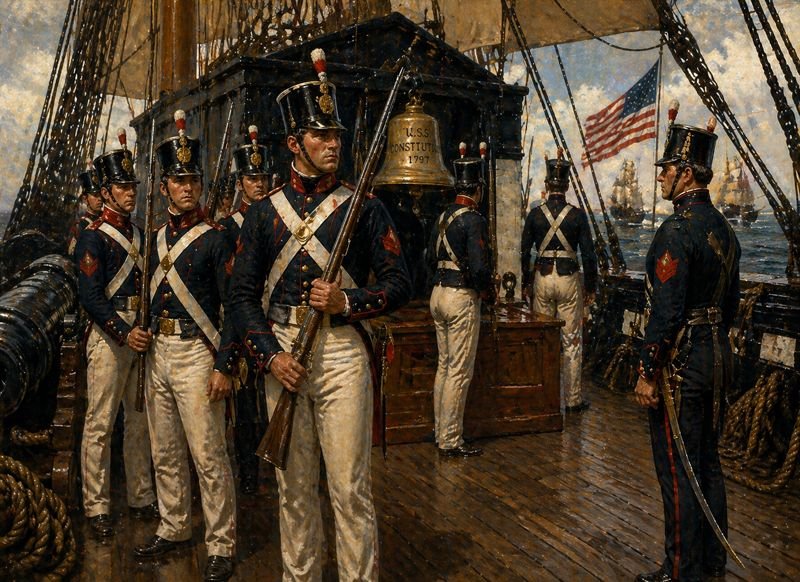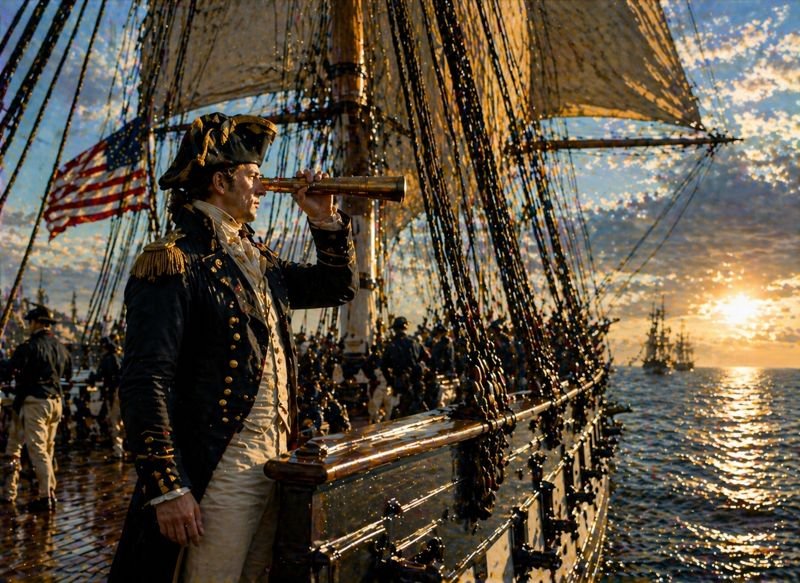
The USS Constitution (famously known as “Old Ironsides”) is one of the most iconic warships in naval history and the oldest commissioned warship still afloat in the world. Launched in 1797 in Boston, Massachusetts, the ship was one of six original frigates authorized by the Naval Act of 1794, a piece of legislation designed to establish a permanent United States Navy capable of protecting American commerce and sovereignty.
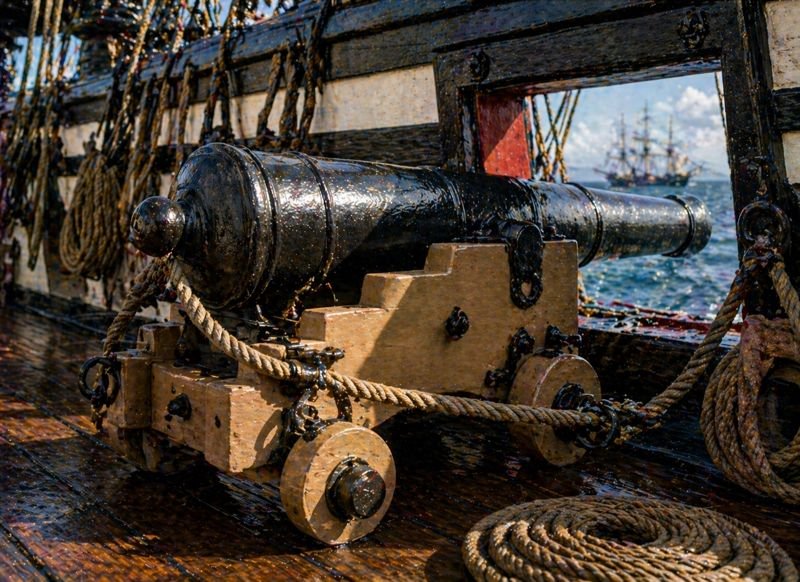
The Constitution was designed by naval architect Joshua Humphreys as a “super-frigate,” intended to be larger, faster, and more heavily armed than typical European frigates. Built with thick live oak timbers, its hull was exceptionally strong, a feature that would later become legendary in combat. Armed primarily with 24-pounder long guns, the ship possessed greater firepower than most of its contemporaries, giving it a distinct advantage in one-on-one engagements.
The ship’s early service came during the First Barbary War. During this conflict, the USS Constitution operated in the Atlantic and Mediterranean, helping to protect American shipping from French privateers and Barbary pirates. Under commanders such as Edward Preble, the ship served as a flagship and played a key role in projecting American naval power overseas.
However, it was during the War of 1812 that USS Constitution earned its enduring fame. At the outset of the war, the United States Navy was vastly outnumbered by the British Royal Navy, but American frigates like the Constitution were designed to outperform standard British ships in individual engagements.
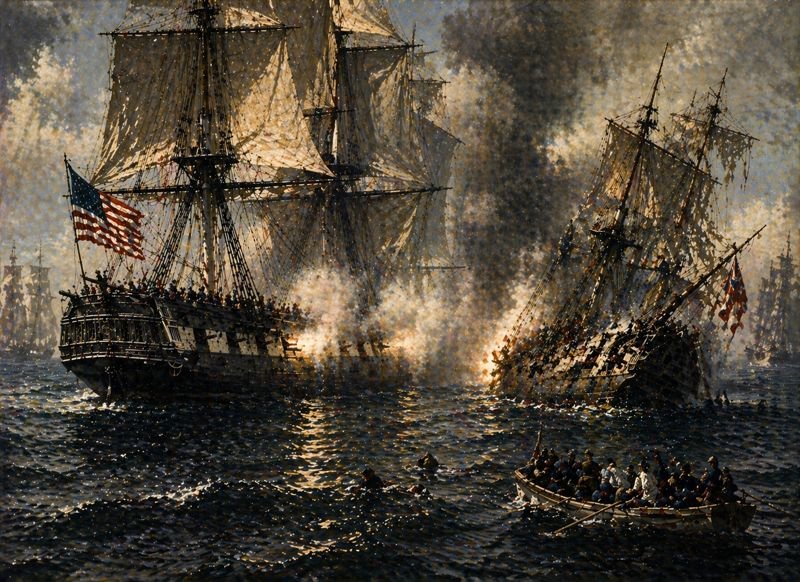
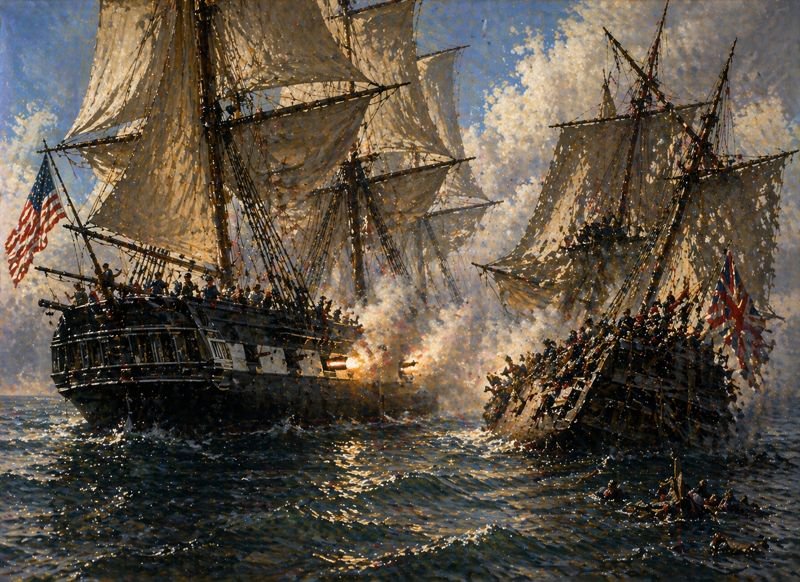
One of the most notable figures associated with the ship is Isaac Hull, who commanded USS Constitution during the early part of the war. Hull first demonstrated his skill by escaping a British squadron through a combination of clever tactics and exceptional seamanship. Shortly afterward, on August 19, 1812, he led the ship to victory over HMS Guerriere. During this battle, British cannonballs were seen bouncing off the ship’s thick hull, earning it the nickname “Old Ironsides.”
Command of the ship later passed to William Bainbridge, who secured another major victory on December 29, 1812, against HMS Java. Despite being wounded during the battle, Bainbridge maintained command and ensured that the ship’s superior firepower and durability were brought to bear. The destruction of Java reinforced the Constitution’s reputation as a formidable warship.
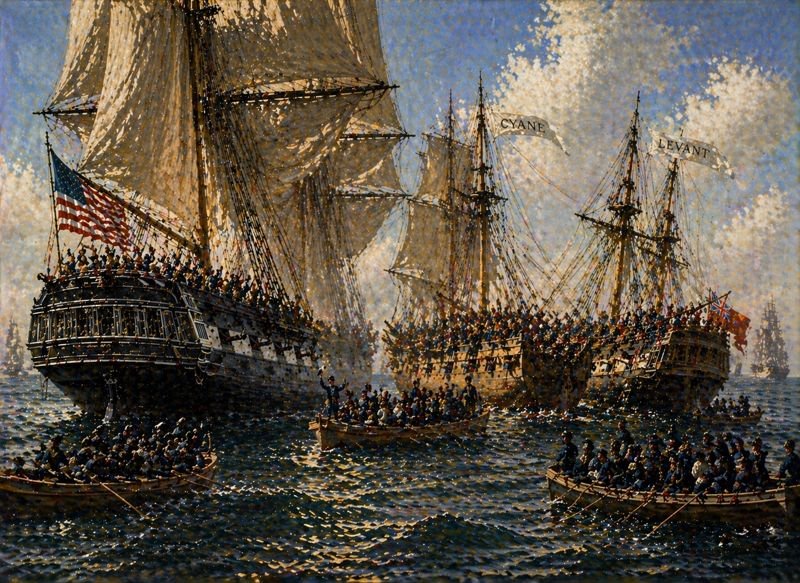
Another key figure in the ship’s history is Charles Stewart, who commanded USS Constitution later in the war. In February 1815, Stewart achieved a remarkable victory by capturing two British ships, HMS Cyane and HMS Levant, in a single engagement. This action, one of the final naval battles of the war, demonstrated the ship’s continued effectiveness and the skill of its crew.
Beyond its famous battles, USS Constitution also represents the broader development of the United States as a maritime nation. Its success during the War of 1812 helped to establish confidence in the U.S. Navy and proved that American ships and sailors could compete with the world’s leading naval power. The victories of the Constitution provided a significant boost to national morale at a time when he war’s outcome was uncertain.
After the War of 1812, USS Constitution continued to serve in various roles, including patrols, diplomatic missions, and training duties. Over time, however, advances in naval technology, particularly the transition to steam power and ironclad ships, rendered wooden sailing frigates obsolete. Despite this, the Constitution was preserved due to its historical significance, becoming a symbol of American naval heritage.
During the American Civil War, the ship served as a training vessel, helping to prepare naval officers for service in a rapidly expanding navy. In the decades that followed, it continued to be maintained and restored, reflecting a growing appreciation for its historical importance.
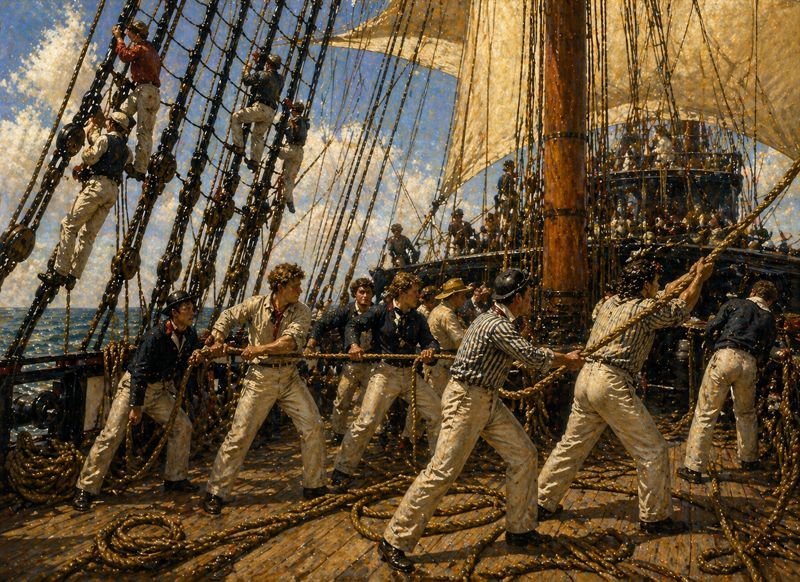
Today, USS Constitution is stationed in the Charlestown Navy Yard in Boston, where it remains an active-duty commissioned ship of the United States Navy. It is crewed by sailors who not only maintain the vessel but also serve as ambassadors, educating the public about its history. The ship occasionally sails for ceremonial purposes, ensuring that it remains a living part of naval tradition rather than a static museum piece.
In modern times, leadership of the ship continues to make history, as seen with Billie J. Farrell, who became the first woman to command USS Constitution. Her appointment reflects the evolving nature of the Navy whilst maintaining a connection to its past.
Ultimately, USS Constitution stands as a powerful symbol of innovation, resilience, and American identity. From its early service in distant waters to its legendary victories in the War of 1812, the ship has played a central role in shaping the history of the United States Navy. Its preservation ensures that this legacy continues to inspire future generations, making it not just a relic of the past but a continuing embodiment of American maritime tradition.